Mastering Artistic Depth with Cool Textured Watercolor PS Styles
In the digital design landscape, the quest for authenticity often leads creators back to traditional mediums. There is an undeniable charm in the unpredictability of watercolor—the way pigment bleeds into paper, the subtle variations in saturation, and the organic texture that no solid vector fill can replicate. However, integrating these analog qualities into a modern digital workflow used to be a time-consuming process involving complex masking, layer blending modes, and manual brush work. Today, tools like Cool Textured Watercolor PS Styles have revolutionized this process, allowing designers to inject soulful, hand-painted aesthetics into their projects with a single click.
The Power of One-Click Texture in Modern Design
Digital design has long been criticized for feeling too sterile or "perfect." While precision is valuable, many brands and personal projects crave a human touch. This is where specialized asset packs become indispensable. The Cool Textured Watercolor PS Styles are not merely decorative filters; they are comprehensive style libraries designed to bridge the gap between vector precision and painterly chaos.
These styles function as pre-configured sets of instructions within Adobe Photoshop and Adobe Illustrator. When applied, they instantly transform flat shapes, text layers, or image selections into elements that appear to be painted on textured paper. The utility extends far beyond simple decoration. Imagine applying a specific watercolor wash to a headline font to create a whimsical logo, or using it to fill a geometric shape in a presentation slide to add visual interest without overwhelming the content. The versatility allows for accents on images, borders, or even entire backgrounds, making it a staple for social media managers, graphic designers, and illustrators alike.
What Makes These Styles Unique?
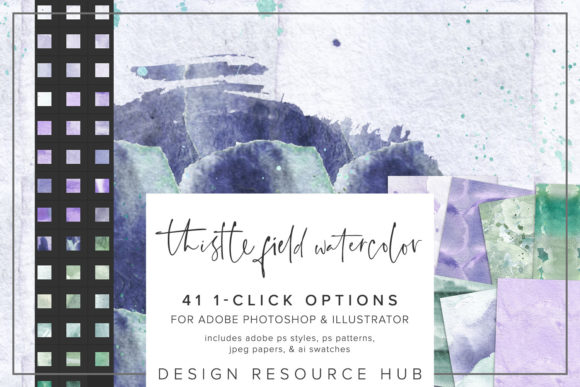
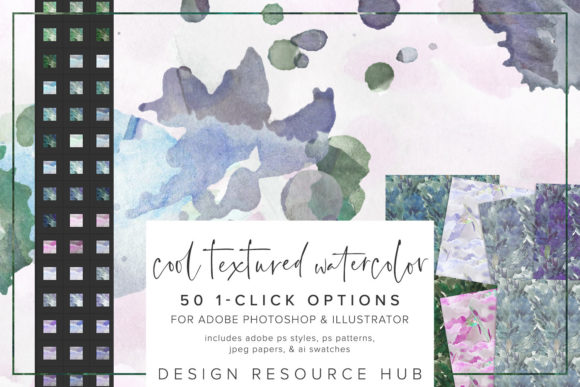
The distinction between a generic filter and a high-quality style pack lies in the depth of the assets provided. The Cool Textured Watercolor PS Styles package is built on a foundation of high-resolution resources. It includes JPEG paper files sized at 10 x 10 inches, which serve as the base texture for the effects. Unlike low-resolution textures that pixelate when scaled up, these seamless patterns maintain their integrity at any size. This scalability is crucial for print designers who need to apply these textures to large format posters or packaging without losing detail.
Furthermore, the set is cross-platform compatible. It isn't limited to just one application. By including an Adobe Photoshop .pat file (for patterns), an .asl file (for styles), and an Adobe Illustrator .ai swatch file, the resource ensures that your workflow remains fluid whether you are working on a raster-based photo edit or a vector-based brand identity. This interoperability means you can start a concept in Illustrator and refine the textures in Photoshop without needing to recreate your assets from scratch.
Seamless Integration into Your Workflow
One of the most significant barriers to adopting new design tools is the installation complexity. Many designers hesitate to download asset packs if they require complicated setups or third-party plugins. Fortunately, the Cool Textured Watercolor PS Styles are designed for immediate usability. They utilize native import functions within Adobe's ecosystem, ensuring a completely seamless experience.
Installation is straightforward and follows the standard procedures for loading custom assets in Adobe Creative Cloud applications:
- For Photoshop Styles (.asl): Navigate to the Styles panel, access the menu options, select "Import Styles," and locate your downloaded .asl file. Once loaded, the watercolor presets will appear in your panel, ready to be clicked onto any active layer.
- For Photoshop Patterns (.pat): Go to the Edit menu, choose "Presets" then "Preset Manager," select "Patterns," and load the .pat file. Alternatively, you can use the Pattern Overlay effect directly to browse and import the library.
- For Illustrator Swatches (.ai): Open the Swatches panel, click the menu icon, and select "Open Swatch Library" followed by "Other Library." Locate the .ai file to load the color swatches and texture definitions directly into your workspace.
This streamlined approach ensures that the time saved on installation translates directly into creative time. You aren't fighting the software; you are leveraging it to produce high-end results faster.
Practical Applications and Creative Scenarios
How do these styles translate into real-world projects? Consider a wedding invitation suite. Instead of spending hours painting each element by hand or searching for stock photos that don't quite match the color palette, a designer can type out the couple's names, apply a Cool Textured Watercolor PS Style, and instantly achieve a soft, romantic look. The texture adds a tactile quality that suggests luxury and care.
In corporate branding, these styles can soften a rigid aesthetic. A tech company might use a sleek, minimalist layout but apply a subtle watercolor texture to their "About Us" section background to convey creativity and approachability. The ability to change the scale of the patterning allows for nuanced control; a small-scale texture might work best for a delicate border, while a larger, more dramatic pattern could anchor a hero banner.
Another powerful use case involves combining these styles with custom brushes. While the one-click styles provide the foundation, adding hand-painted strokes on top creates a layered, dimensional effect that mimics the actual layering of paint. This hybrid approach gives artists the best of both worlds: the efficiency of digital tools and the organic feel of traditional art.
Why Texture Matters in Digital Media
Beyond the convenience factor, there is a psychological component to using textured assets. In an era of screen fatigue, audiences are increasingly drawn to content that feels tangible. Flat design trends have evolved into "skeuomorphic" revivals and "neo-brutalism," all of which rely heavily on texture to create depth and hierarchy.
The Cool Textured Watercolor PS Styles address this need by providing a consistent library of textures that can be applied across various touchpoints. Consistency is key in branding. Whether it's an Instagram story, a website header, or a business card, using the same texture profile helps unify the visual language of a brand. The included JPEG paper files ensure that even if you decide to use the texture as a standalone background rather than a layer style, the quality remains pristine.
Moreover, these styles encourage experimentation. Because they are non-destructive, designers can try different combinations of colors, opacities, and blending modes without permanently altering the original artwork. If a specific watercolor effect doesn't land well, it can be removed or adjusted in seconds. This flexibility lowers the barrier to entry for trying bold, artistic concepts that might otherwise seem too risky or time-consuming.
Optimizing Your Results
To get the most out of the Cool Textured Watercolor PS Styles, consider how lighting and contrast interact with the texture. Watercolor effects often rely on the underlying color of the layer to show through the translucent "paint." Therefore, choosing vibrant base colors can result in richer, more dynamic outcomes. Additionally, adjusting the "Scale" setting within the Pattern Overlay dialog allows you to fine-tune the graininess of the paper texture, ensuring it complements the size of your design elements.
Don't limit yourself to text and shapes. Try applying these styles to masks or clipping paths over photographs. This technique can turn a standard portrait into a stylized illustration, perfect for editorial layouts or album covers. The seamless nature of the patterns means you won't see harsh edges or repeating tiles, maintaining the illusion of a continuous, hand-painted surface.
Ultimately, the value of these assets lies in their ability to democratize high-level artistic effects. They empower designers of all skill levels to incorporate sophisticated textures into their work, elevating the overall quality of their output without requiring years of traditional painting training. By integrating Cool Textured Watercolor PS Styles into your toolkit, you open the door to a world of creative possibilities where digital efficiency meets analog beauty.