Summer Retro Background Paper: A Practical Evaluation
Digital scrapbooking, junk journaling, and sublimation printing have evolved into sophisticated hobbies where the quality of background textures plays a pivotal role in the final aesthetic. Among the various digital assets available, Summer Retro Background Paper has gained attention for its specific combination of nostalgic color palettes and high-resolution technical specifications. For creators evaluating whether this resource fits their workflow, understanding the technical constraints, artistic applications, and potential tradeoffs is essential before making a selection.
Understanding the Product Specifications
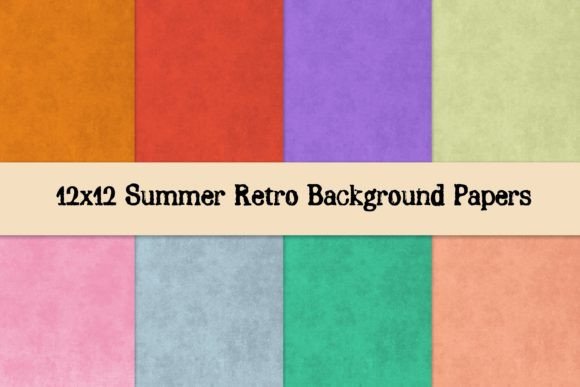
The core value proposition of Summer Retro Background Paper lies in its precise technical configuration. These digital files are delivered as JPG images, compressed within a zip file for efficient download and storage. The dimensions are standardized at 12x12 inches, a format that aligns perfectly with industry-standard scrapbook paper sizes and many commercial printing templates. Crucially, the resolution is set at 300 DPI (dots per inch).
In the context of digital design, 300 DPI is the benchmark for print-ready materials. This density ensures that when the image is rendered on physical media, the pixels remain indistinguishable to the naked eye, resulting in sharp lines and smooth gradients. Unlike lower-resolution web graphics which may appear pixelated or blurry when printed, these files are engineered specifically for output. The use of the JPG format offers a balance between file size and image fidelity, making it compatible with almost all graphic design software, from professional suites like Adobe Photoshop to consumer-friendly tools like Canva or Cricut Design Space.
Aesthetic Characteristics and Design Intent
The visual identity of Summer Retro Background Paper is defined by its vibrant color palette and retro-inspired patterns. These designs typically evoke the warmth and nostalgia of mid-to-late 20th-century summer aesthetics, often featuring bold yellows, oranges, teals, and coral tones. The "retro" element usually incorporates geometric shapes, sunburst motifs, or distressed textures that mimic aged paper without sacrificing the clarity required for modern printing.
For designers seeking to create a cohesive theme, these papers provide a ready-made foundation. The vibrancy of the colors is preserved through the high-bit depth of the JPG format, ensuring that the hues do not appear washed out during the printing process. This makes them particularly suitable for projects requiring a strong visual impact, such as album covers, event invitations, or cover pages for journals.
Applications in Junk Journaling and Physical Crafts
One of the primary use cases for these digital papers is the creation of junk journals. Junk journaling involves assembling mixed-media books using ephemera, tags, and patterned papers. A significant hurdle for digital junk journalers is finding printable backgrounds that maintain quality after being cut and layered. Summer Retro Background Paper addresses this directly.
Because the files are optimized for printing at 12x12 inches, users can print them on standard cardstock or heavy-weight printer paper without fear of degradation. The 300 DPI resolution ensures that even small details within the retro patterns remain crisp when trimmed down to smaller tags or embellishments. This reliability allows crafters to focus on the assembly and layering aspects of their projects rather than troubleshooting print quality issues. The ability to print multiple copies of the same design facilitates the creation of matching sets for different sections of a journal.
Integration into Sublimation Workflows
Beyond traditional paper crafts, these background papers offer significant utility in sublimation design. Sublimation involves transferring dye onto substrates like mugs, t-shirts, or tumblers using heat. In this medium, the background serves as the canvas for text, logos, or other graphics.
When utilizing Summer Retro Background Paper for sublimation, the versatility of the JPG format becomes an asset. Designers can import the background into their editing software and apply masks to isolate specific areas, allowing for complex layering. Furthermore, the use of brushes and blending modes can help integrate the retro texture seamlessly with other design elements. For instance, a designer might mask out a portion of the retro pattern to place a photo or text overlay, creating a custom look that retains the vintage feel while adding personalization. The high resolution is critical here, as sublimation printers often require sharp source files to prevent banding or color shifting on the final product.
Benefits and Strategic Advantages
There are several strategic advantages to incorporating these papers into a creative toolkit. First, the time efficiency cannot be overstated. Creating a seamless, high-resolution retro pattern from scratch requires advanced skills in vector illustration or texture generation. By using pre-designed Summer Retro Background Paper, creators bypass the initial design phase and move immediately to application.
Second, the consistency of the 12x12 inch format simplifies the planning process. Whether designing a single page or a full album, knowing the exact dimensions reduces the need for resizing, which can sometimes introduce compression artifacts. Finally, the vibrant color profiles are calibrated to reproduce well on standard inkjet and laser printers, reducing the likelihood of color mismatches between the screen preview and the physical print.
Tradeoffs and Considerations
While the benefits are clear, there are tradeoffs to consider. The primary limitation is the static nature of the JPG format. Unlike vector files (such as SVG or EPS), raster images cannot be scaled infinitely without losing quality. If a user attempts to stretch the 12x12 inch image beyond its original dimensions, the resolution will drop below 300 DPI, resulting in visible pixelation. Therefore, these papers are best suited for their intended size or slightly smaller reductions.
Additionally, the JPG format does not support transparency. If a project requires a background with transparent sections to reveal layers underneath, the creator must manually edit the image using masking tools. While this is a common practice, it adds an extra step compared to working with PNG files that have built-in alpha channels. Users must also ensure their printing environment matches the color profile of the file; otherwise, the vibrant summer tones may appear slightly muted depending on the printer's color management settings.
Evaluating Fit for Specific Projects
Summer Retro Background Paper is a strong fit for creators who prioritize print quality and thematic consistency. It is ideal for:
- Junk Journal Enthusiasts: Those building physical albums who need reliable, high-quality printable pages.
- Sublimation Artists: Designers creating custom merchandise who need vibrant, textured backgrounds that hold up under heat transfer.
- Event Planners: Individuals designing invitations or decorations for summer-themed events with a vintage twist.
- Digital Scrapbookers: Users creating digital layouts that may eventually be printed for archival purposes.
Conversely, alternatives may be worth considering in certain scenarios. If a project requires extreme scalability—such as a large-format banner or billboard—the raster-based JPG format is insufficient, and vector-based retro patterns would be a better choice. Similarly, if the design workflow relies heavily on non-destructive editing with multiple transparent layers, a PSD or AI file format might offer more flexibility than a flat JPG. Finally, if the desired aesthetic is strictly modern or minimalist, the busy, colorful nature of retro patterns might clash with the overall design intent.
Conclusion
Summer Retro Background Paper represents a practical solution for creators needing high-fidelity, themed textures for both digital and physical projects. Its 300 DPI resolution and 12x12 inch format make it a reliable choice for junk journaling and sublimation, provided the user adheres to the scaling limitations of raster graphics. By weighing the convenience of pre-designed patterns against the flexibility of editable vector formats, creators can determine if this resource aligns with their specific production goals. For those committed to producing vibrant, print-ready work with a nostalgic flair, these papers offer a solid foundation for creative expression.